Professional Solar Panel Cleaning
Careful, panel-safe deep cleaning for residential solar systems across Los Angeles and Southern California.
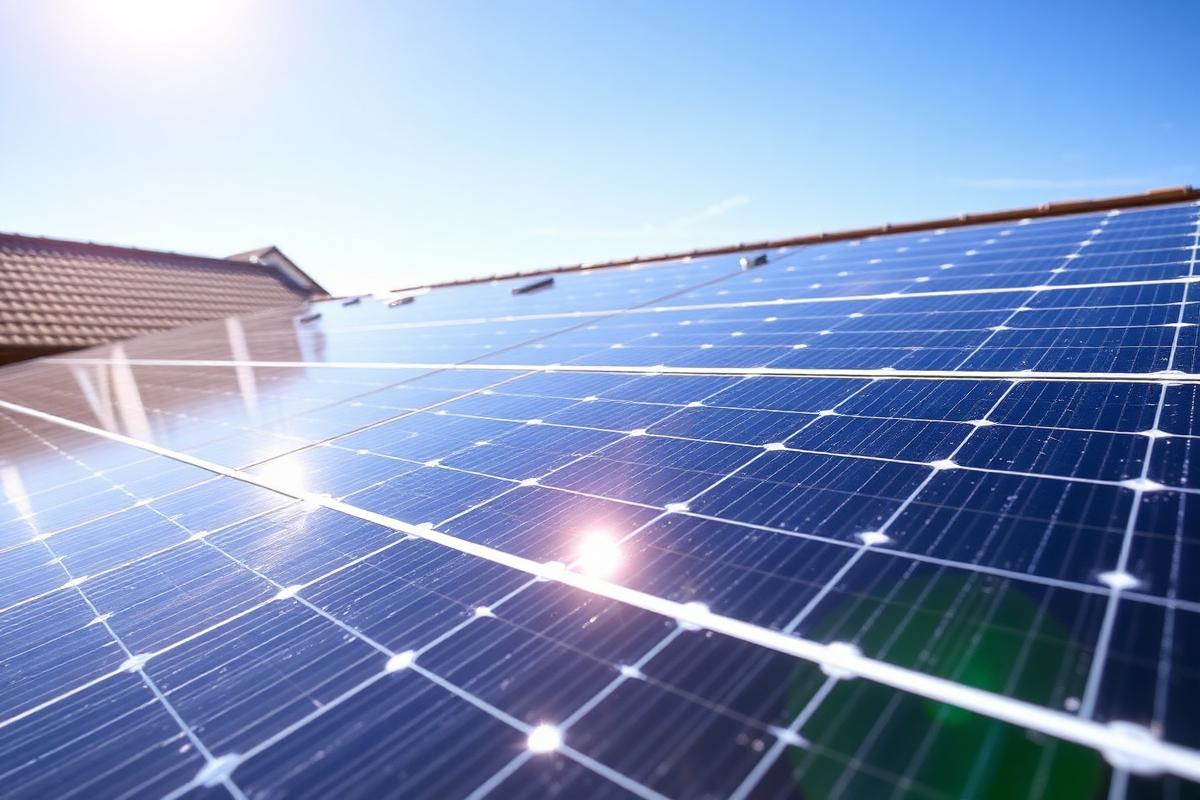
Southern California is one of the toughest environments in the country for rooftop solar. Between year-round sunshine, long dry stretches with almost no rinse-off rain, coastal marine layer, wildfire ash, Santa Ana dust, agricultural pollen, and heavy bird activity around palm trees and tile roofs, your panels take a beating. LA Solar Care is a maintenance-only company built around one goal: keeping your rooftop solar system clean, protected, and cared for — with careful, panel-safe methods and honest recommendations.
Why dirty panels are a bigger deal in SoCal
A visible layer of dust, pollen, or bird droppings isn't just cosmetic. Uneven soiling — a single dropping, a stripe of pollen, or a leaf sitting on one corner — creates 'hot spots' where a small area of the panel is shaded while the rest keeps producing. That imbalance forces the affected cells to work harder, which can lower how much power the array produces and, over time, contribute to premature wear on those modules. Rain helps, but a light SoCal drizzle usually leaves behind a muddy film that's worse than what was there before.
What we remove during a full cleaning
- Baked-on dust, dirt, and Santa Ana wind grime
- Bird droppings (fresh and hardened)
- Tree sap, pollen film, and pollen crust
- Leaves, twigs, feathers, and light nesting debris
- Hard-water spots from sprinklers hitting the array
- Coastal salt haze and marine-layer residue
- Wildfire ash and soot after regional smoke events
- Accessible debris that has settled around the module frames
Our cleaning process, step by step
We treat every roof like it's our own — no cutting corners, no shortcuts. Here's exactly what happens when the van pulls up:
- Walk-around inspection of the roof, array, and drainage
- Photos of the panels before we touch anything
- Site setup with ladders, fall protection, and drop cloths where needed
- Pre-rinse with filtered water to lift loose debris
- Panel-safe soft-bristle wash — no harsh brushes, no abrasive pads
- Spot treatment for bird droppings, sap, and stubborn buildup
- Final rinse with deionized water so the panels dry spot-free
- Second walk-around, cleanup of the work area, and after photos
- Written summary of anything we noticed during the visit
Panel-safe methods — what we never do
- No pressure washers pointed at the panels
- No steel wool, scouring pads, or abrasive brushes
- No harsh detergents, bleach, ammonia, or vinegar
- No walking on the modules themselves
- No aggressive scraping that can damage the anti-reflective coating
- No leaving standing water or soap residue on the roof
How often should you clean your panels?
There's no one-size-fits-all answer, but here's what we typically see across Southern California:
- Most homes: once or twice per year
- Homes under trees or near palms: every 3–4 months
- Coastal properties with salt haze: every 4–6 months
- Homes with active bird or pigeon issues: quarterly, plus critter guards
- Inland / desert-edge homes with heavy dust: every 4–6 months
- After a wildfire smoke event: schedule a cleaning as soon as it's safe
What affects your quote
We don't do generic per-panel pricing because every roof is different. When we quote your job, we look at:
- Number of panels and array layout
- Roof height (single-story vs. multi-story)
- Roof pitch and walkability
- Type of roof (tile, comp shingle, flat, metal)
- How much buildup is on the panels
- Whether accessible water is available on-site
- Ease of access — gates, landscaping, second-story balconies
- Any add-on services (inspection, gutter cleaning, critter guards)
One-time cleaning vs. a maintenance plan
A single cleaning is a great starting point — especially if it's been a while, or if you're seeing droppings and buildup for the first time. Most homeowners who start with a one-time visit end up switching to a recurring plan because it keeps the panels consistently clean, locks in priority scheduling, and usually costs less per visit than calling us out one job at a time.
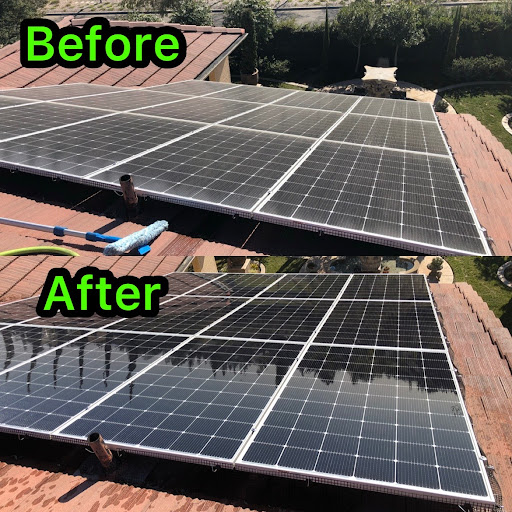
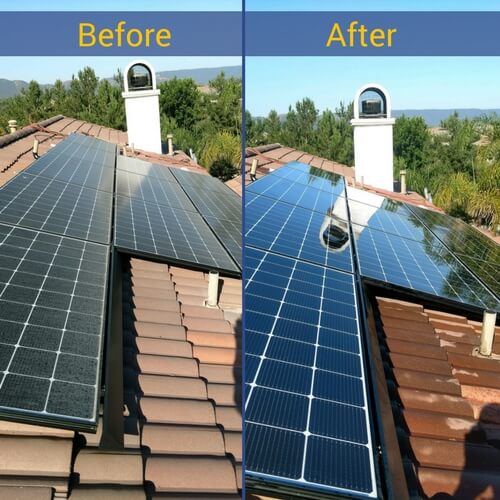
Real before-and-after results
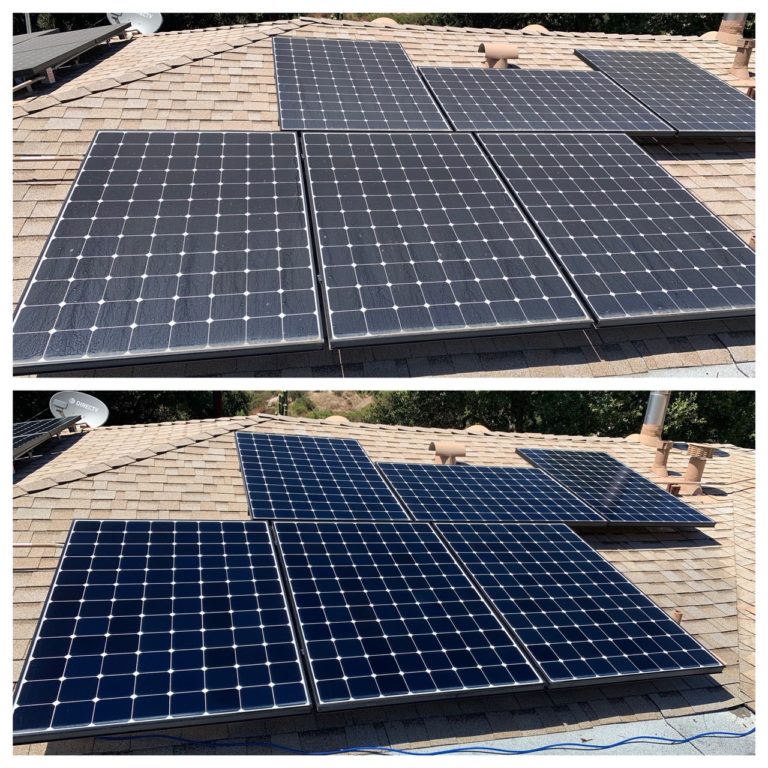
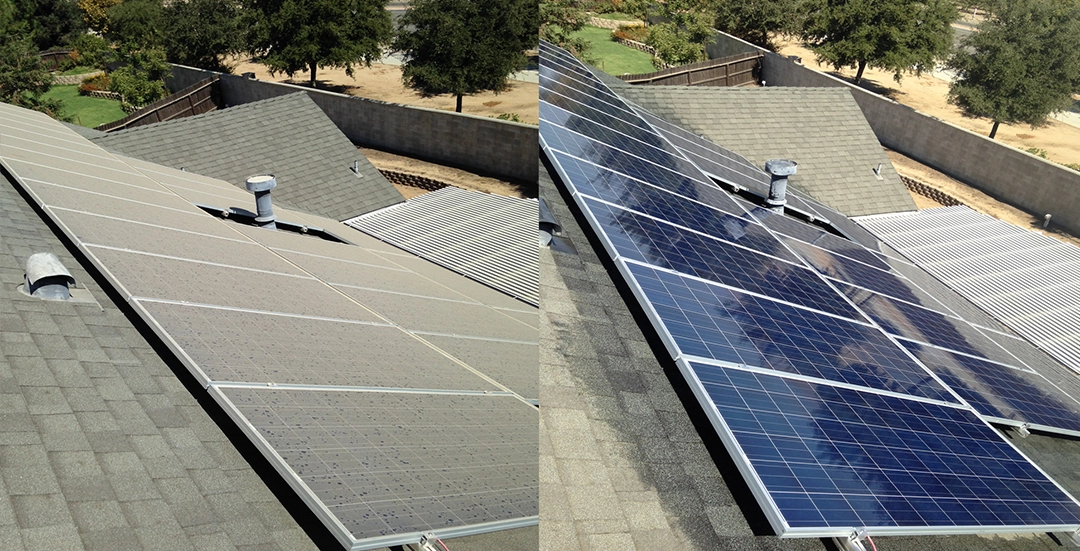
Every one of these panels was cleaned by LA Solar Care. Same panels, same roof, same day — just with the dirt, droppings, and buildup taken off.
Frequently Asked Questions
Will you send before-and-after photos?+
Yes — photo documentation is included with every service, so you can see exactly what your panels looked like before we arrived and after we finished.
Do I need to be home during the cleaning?+
No. As long as we have access to your roof and a water spigot, most cleanings can be completed without you being on-site. We'll text before and after photos when the job is done.
Do you use my water or bring your own?+
We typically use your outdoor water spigot with our own filtration and pumping equipment to produce purified, spot-free water. If your property doesn't have accessible water, we can bring tanks — just let us know when you book.
Can you clean panels on a tile roof?+
Yes. We work on tile, composition shingle, flat, and metal roofs. Tile roofs require extra care to avoid cracking tiles, and we set up our equipment accordingly.
How long does a typical cleaning take?+
Most residential systems (8–30 panels) take between 45 minutes and 2 hours from setup to cleanup, depending on roof access and how heavy the buildup is.
Do you offer recurring plans?+
Yes — we offer annual, biannual, and quarterly maintenance plans. Recurring customers get priority scheduling and lower per-visit pricing.
Is it safe to clean panels in the middle of the day?+
We prefer early morning or late afternoon when panels are cooler. Spraying cold water on very hot glass can stress the modules, so we schedule accordingly.
Request a Free Quote
Tell us about your solar system and we'll get back with an estimate quickly. For fastest service, text photos of your roof to 818-275-0760.
Give your solar panels the care they deserve
Get a fast quote for professional cleaning, inspections, critter guards, bird proofing, debris removal, gutter cleaning, or a recurring maintenance plan.